Thursday, 1 July 2010

EU Caps Mobile Data Roaming Rates

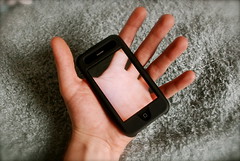
handy little iPhoneImage by Leeks via Flickr

It's a common story: holidaymaker uses the internet on their mobile phone whilst abroad then discovers that they have been charged hundreds of pounds for downloading too much data. Every year it seems that hundreds of travelers are caught out and end up paying huge amounts for what they thought was included in their regular bill. Whilst unlimited* data plans are now the norm most providers charge extra for using mobile internet overseas.

One British student studying abroad in Spain ran up a bill of €9,000 for just one month of data roaming while a German tourist reported being charged €46,000 for downloading a TV programme while holidaying in France. Last year, one Irish holidaymaker ran up a bill of €200 when using his iPhone as a satnav in France. Irishtimes.com


The EU has now stepped in and reportedly 'capped' roaming charges. The truth is slightly more complicated, usage will be limited to €50 after which the customer's connection will be cut off. The connection can be reinstated and higher or lower limits can also be chosen. £40 is still quite a lot to be spending on top of a standard monthly subscription. The maximum charge per mb is also being reduced from €1 to 80 cent.

Hopefully reductions in mobile roaming costs will continue to fall over the forthcoming years. Since 2005 costs have already fallen by 73% as internet use on mobile phones become more widespread. This is great news for consumers who are now used to having internet access at all times via smart phones.

Having an internet enabled phone abroad can be a real help particularly a if it's a smart phone with Applications. Being able to look up car hire information and see your location on Google Maps plus having applications such as the Lonely Planet guide makes things much more straight-forward. It's nice to know that you won't be shocked by an excessive bill on your return home.

3D Games on the HTC Desire


Video by Memmx

Sunday, 13 June 2010

Top 5 Free Mobile Travel Apps

These day I wouldn't dream of traveling without my mobile phone although I rarely use it to make calls. Built in GPS means that I almost never get lost (unless I stray out of reach of a decent signal) and my collection of Travel apps keep me amused and informed.

An internet enabled mobile phone is also a great guide book and reference tool. Wondering when that Cathedral was built? Looking for a cheap place to eat? Need to work out a currency conversion? Google has all the answers and more.

Below are 5 of the best mobile Apps for travelers all of which are free to download and use. Some of these Apps are available on other platforms, if not there are likely to be alternatives. If you have anything else to add please do so in the comments.

1. Flightview [iPhone] [Blackberry] [Web]

Flightview lets you keep up to date with flight schedules, weather conditions and the status of your flight. Enter your Airport code (LDN, JFK e.t.c) and your flight number for real time information.
"Receive alerts concerning flight status changes, flight delays, flight cancellations and gate assignment changes, whether your app is open or closed. Use the Notes feature to add car hire and hotel reservation numbers, and other important trip information."


2. Google Maps App [web] [mobile]

The most used feature of my phone when I travel, Google Maps lets you see where you are when combined with the built in GPS which most Smart Phones now have. You can find directions and follow your progress on the map in real time. Use the search feature to locate cash points, coffee shops and train stations. You can also read customer reviews of restaurants and hotels to help you make up your mind.

3. Wi-Fi Finder [Web] [iPhone]

Its pretty obvious what this one does but why? Well roaming data rates can be extortionate so using Wifi can save you a lot of money on your return. Also if you happen own a iPod or non 3G iPad then you are reliant on a Wifi connection to get online. If you can find a free Hotspot then it is a much better option than visiting a cyber cafe.

4. Urbanspoon [iPhone]

Urban spoon helps you to choose where to eat which is particularly useful when you find yourself in a new city with no local knowledge. The user interface is a pleasure to use, simply select a location, a type of cuisine and a price range then shake to see what is suggested. If you don't like what come up then just shake again until you get a satisfactory answer.


5. AccuWeather [iPhone]

Being away from home it can be difficult to keep up to date with the weather forecast. When you are traveling the chances are you will be outside a lot of the time and therefore will need to dress appropriately. The AcuuWeather app using you location and gives you a fairly reliable indication of the approaching weather conditions.

Enhanced by Zemanta

Wednesday, 14 April 2010

Labour Details Broadband Plan

Yesterday Labour released their 2010 Manifesto in anticipation of the forthcoming election. With the election on the horizon the main political parties all seem hesitant to use the 't' word. Considering the unpopular nature of Labour's proposed 'Broadband Tax' I was interested in seeing if this was mentioned at all.

The Tax is to return should Labour win the election with 50p per month being charged to all homes with landline connections. This is needed, Labour says, in order to cover the cost of providing broadband for all. The Manifesto (PDF link) states that:

Britain must be a world leader in the development of broadband. We are investing in the most ambitious plan of any industrialised country to ensure a digital Britain for all, extending access to every home and business. We will reach the long-term vision of superfast broadband for all through a public-private partnership in three stages:

* first, giving virtually every household in the country a broadband service of at least two megabits per second [2Mbps] by 2012;

* second, making possible superfast broadband for the vast majority of Britain in partnership with private operators, with Government investing over £1 billion in the next seven years;

* and lastly reaching the final ten per cent using satellites and mobile broadband.

The proposed tax would generate £175m per year to improve the coverage and infrastructure of the current broadband system. The 10% of people who live in areas which cannot be reached by normal broadband will be able to connect using mobile broadband. The problem with this theory is that, whilst mobile broadband coverage has improved a great deal, the areas which are not covered are likely to be the remote rural areas which are also not covered by normal broadband.

Thursday, 1 April 2010

News Round Up

Sorry for the recent lack of updates I have been too busy to spend as much time as I would like posting. I lieu of a full post here are some links to interesting articles I have read over the last week or so. There has been a lot of talk lately about the future of Broadband so there is lots to talk about!

  • Mobile Phone company MTS, are to release thermoresistant SIM cards which are able to withstand temperatures from -40 to +105C. Handy if you live in some kind of freezing wasteland/ scorching desert.
  • Ferrets are key to bridging the digital divide between cities and rural areas according to one Broadband provider. (Check the byline date)
  • Broadband 'to reduce the gap between internet and TV'. Will the computer screen become the new television screen?
  • Gordon Brown want high speed Broadband to 'prevent a digital divide' and yet Labour are trying to rush the Digital Economy Bill through through Parliament before the election.
  • Ofcom wants cheaper mobile phone calls and easier network switching. In particular they may force providers to make cross-network calls cheaper.
  • Bangladesh has blocked 1.5 million mobile numbers and tightened regulations for buying and selling SIM cards in order to prevent mobile related crime.